
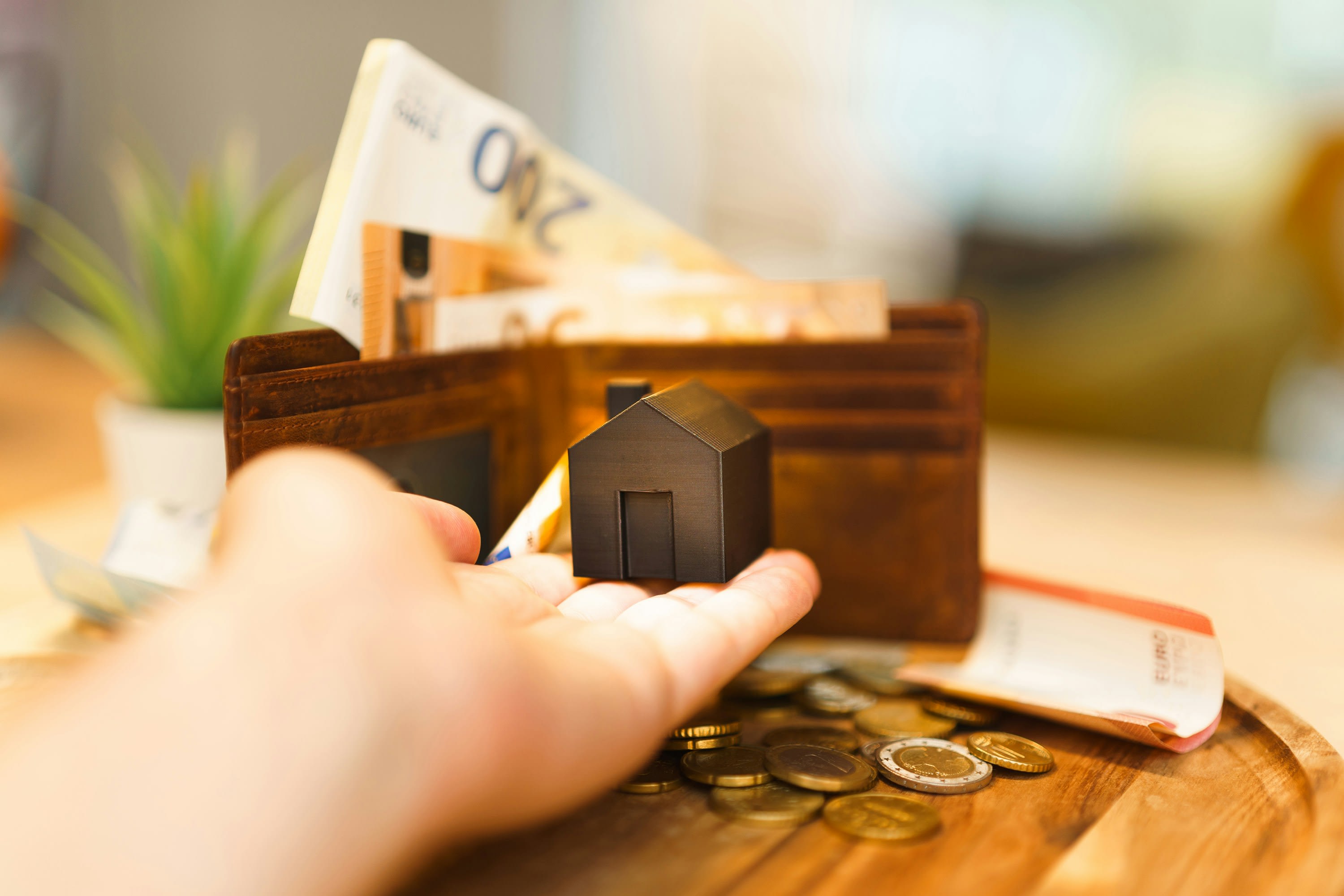

Should you sell your house now or wait for mortgage rates to drop in central New Jersey?
For most sellers in Middlesex and Somerset counties, waiting on rates rarely pays off: tight inventory is keeping prices firm right now, and the rate you'll pay on your next home matters less than your timeline, your equity, and what you're moving toward. If you need more space, a shorter commute, or you're relocating for work, selling into today's tight market usually beats sitting on the sidelines for a rate drop that may not show up on your timeline. The right answer depends on your equity position and what your next home actually costs you, not the headline rate.
By David Tibbetts | September 11, 2026
I hear this question almost every week, usually from a seller sitting on a mortgage rate that starts with a 2 or a 3. They love their rate. They just don't love their house anymore, or their commute, or the fact that their family outgrew it two years ago. So they ask me: should I sell now, or wait until rates come back down?Here's what I tell them, and here's what I'll tell you.
The Real Question Isn't the Rate, It's Your Math
Rate headlines make this feel like a market-timing decision. It isn't, not really. It's a math problem specific to your equity, your next purchase price, and your timeline. Once you run the actual numbers, "wait for rates" usually stops being the obvious answer.
Say you're selling a $650,000 colonial in East Brunswick with $250,000 in equity, and you're buying something similar in Hillsborough or Branchburg. At today's roughly 6.9% rate on a $520,000 loan, you're looking at a principal and interest payment around $3,425 a month. If rates drift down to 6.4%, that same loan drops to about $3,253. That's a real difference, about $172 a month, or roughly $2,065 a year.
But here's what that comparison leaves out: while you're waiting for that 0.5-point drop, home prices in Middlesex and Somerset counties aren't sitting still. Inventory has stayed tight through 2026, and tight inventory keeps upward pressure on price. If the home you want gains even 3% in value while you wait, you've erased most or all of the payment savings, and you're now competing for it against more buyers, because lower rates always pull more buyers off the sidelines at the same time.
That's the trade-off nobody puts in the headline: rates and prices tend to move in opposite directions from your favor. When rates drop, demand rises and so does price. When rates stay high, fewer buyers compete, but you're financing at today's number.
What Waiting Actually Costs You in a Tight Market
Inventory across Middlesex and Somerset counties has been thin for over a year, and it's not loosening fast. That scarcity is exactly why home values in the $400,000 to $900,000 range have held firm even with rates elevated. If you're a seller waiting for "better conditions," you're waiting inside a market that's already working in your favor on the sale side.
Consider what waiting actually costs a typical seller:
Carrying costs. Every extra month in your current home is a month of property taxes, insurance, and maintenance you're paying on a house you've already decided to leave.
Opportunity cost on equity. Home equity sitting idle in a house you're planning to sell isn't earning you anything. Once it's in hand from a sale, it's working toward your next purchase, or your next goal.
Competing against your future self. If rates drop, so does everyone else's monthly payment. More buyers enter the market for the same tight pool of listings, and you'll be one of them, competing for your next home, too.
I walked a seller in Piscataway through this exact scenario earlier this year. She'd locked in a 3.1% rate in 2021 and was convinced that moving now, at 6-something percent, was financially reckless. Once we ran her actual net proceeds against her target purchase price in Monmouth, the picture changed. Her equity covered nearly all of her new down payment, and the payment difference, while real, was smaller than the rent she'd pay if she stayed put and leased something bigger instead. The rate mattered less than she thought once we looked at her whole financial picture, not just the interest rate line.
That's the exercise every seller in this position needs before deciding anything. Not "what will rates do," because nobody can answer that with certainty, but "what does my specific move cost and gain me right now."
When Waiting Actually Makes Sense
I'm not going to tell you selling now is always right, because it isn't. There are real situations where waiting makes sense.
Your equity is thin. If you bought recently and don't have much cushion between your payoff and your likely sale price, a few more months of appreciation and paying down principal could matter more than rate movement.
You have no flexibility on your next purchase. If you're moving into a home you can only afford at a lower rate, and you have real runway to wait, that's a legitimate reason to hold. Just be honest with yourself about how long "waiting" might actually take. Rate forecasts have been wrong more often than they've been right over the past few years.
You're not actually motivated to move. If nothing is pushing you, a job, a growing family, a health situation, downsizing, then there's no urgency forcing the decision either way. Take your time.
Outside of those situations, most sellers I work with are better served by acting on their actual timeline than trying to out guess the Fed. If you're weighing whether your house is even ready to list, I've also put together a rundown of maintenance items that quietly cost sellers money if they're left unaddressed before a listing goes live.
When you do decide to sell, keep New Jersey's process costs in mind so you're not surprised at the closing table. The NJ Realty Transfer Fee, paid by the seller, typically runs about 0.7% to 0.9% of your sale price. On that $650,000 East Brunswick example, that's roughly $4,500 to $5,500, collected by the county clerk when your attorney records the deed. You'll also need a current Certificate of Occupancy or maybe just a Smoke/Carbon Monoxide Certificate (check with your town). None of these are optional, and building them into your timeline early keeps your sale from stalling once you're under contract.
Running Your Own Numbers
Every seller's math looks different depending on your loan balance, your equity, your target purchase price, and how long you're realistically willing to wait. That's exactly the kind of question I walk clients through before we even talk about listing, using real numbers from your mortgage statement and current comps in your neighborhood, not national averages.
If you're thinking through this for your own situation, I'd love to help. Feel free to call, text, email, or DM me, whatever works best for you.
About David Tibbetts
David Tibbetts is a REALTOR® with RE/MAX Competitive Edge, serving buyers and sellers across Middlesex, Somerset, Hunterdon, Mercer, and Monmouth counties in central New Jersey. With 18+ years of experience and designations including ABR, SFR, PSA, and CDPE, David specializes in helping clients navigate every stage of the transaction, from first-time purchases to luxury sales and estate properties. Whether you're buying, selling, or just trying to make sense of the market, David brings the local knowledge and straight-talk guidance you need to make confident decisions.
